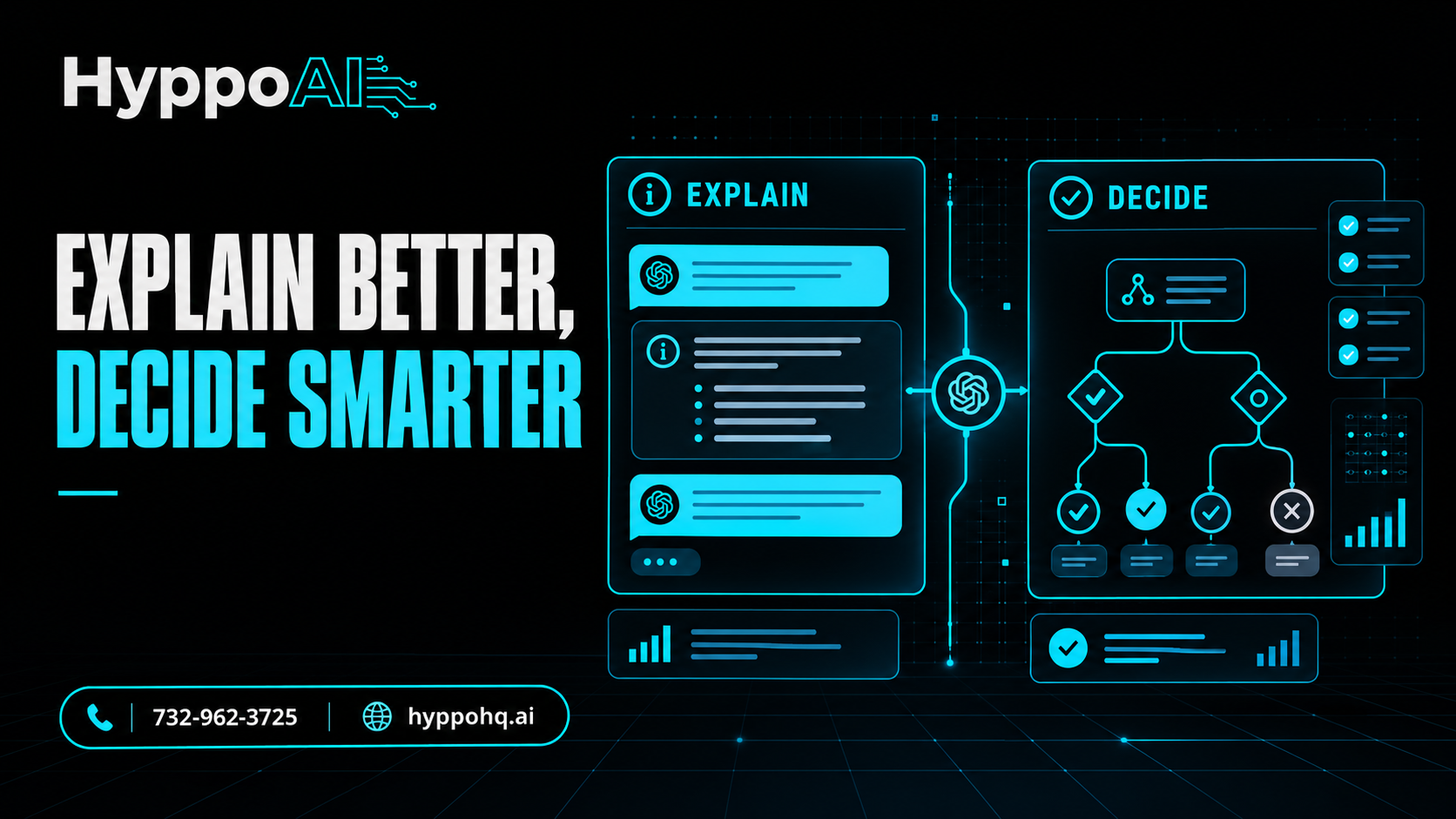
Why ChatGPT is better at explaining than deciding
ChatGPT is impressive at turning messy information into clear language. It can summarize, compare options, explain tradeoffs, and help people understand complex topics in seconds.
That strength often creates a dangerous assumption: if it explains something well, it must also be good at deciding what to do.
It is not the same skill.
For SMB owners and operators, this distinction matters. If you use AI the right way, it becomes a force multiplier. If you use it as a decision-maker without guardrails, it can push you toward confident-sounding but flawed conclusions.
Explaining and deciding are not the same job
Explanation is about organizing information so a person can understand it.
Decision-making is about choosing a path under uncertainty, with real consequences, incomplete data, changing priorities, and human context.
ChatGPT is built to generate likely next words based on patterns in data. That makes it strong at:
- simplifying complex ideas
- reframing information for different audiences
- summarizing long documents
- outlining pros and cons
- turning rough thoughts into usable language
But deciding requires more than language fluency. Good decisions depend on:
- accurate, current facts
- business priorities
- risk tolerance
- ethics and compliance
- accountability for outcomes
- context that may never appear in the prompt
In other words, ChatGPT can help you understand a decision. That does not mean it should own the decision.
Why ChatGPT feels smarter than it is
One reason people overtrust AI is that clear writing feels like clear thinking.
When ChatGPT gives a polished answer, it sounds complete. It sounds reasoned. It sounds certain.
That presentation can create false confidence.
A model can explain a strategy, compare vendors, or describe a hiring plan in a very persuasive way, even when key assumptions are weak or missing. The output may be useful, but usefulness is not the same as correctness.
This is especially important in business settings where small errors create real cost.
The fluency trap
Humans often judge intelligence by communication quality. If something is well written, we tend to assume it is well reasoned.
That is the trap.
ChatGPT is often better at producing a coherent explanation than at verifying whether the explanation should drive action. It can structure a decision memo. It cannot inherently own the lived business reality behind that memo.
Where ChatGPT adds the most value
Used correctly, ChatGPT is extremely helpful. It shines when the goal is to accelerate understanding and reduce friction.
Great use cases for explanation
ChatGPT is strong at:
- explaining a technical concept to a non-technical team member
- summarizing meeting notes into action items
- turning raw research into a readable overview
- drafting SOPs, FAQs, and training docs
- comparing common frameworks or approaches
- helping leaders think through questions they should ask
For SMBs, that means AI can save time across operations, marketing, customer support, and internal documentation.
If your team spends too much time trying to explain the same things over and over, AI can create leverage fast.
Where decision-making gets risky
The problem starts when businesses move from “help me understand” to “tell me what to do” without human review.
Decisions need context AI may not have
A model usually does not know:
- your true margins
- your team’s capabilities
- local market conditions
- customer history
- legal constraints specific to your business
- political realities inside your company
- which tradeoff matters most right now
Even if you provide some of that context, the model still does not carry responsibility for the result.
That matters.
A good decision is not just logically defensible. It must also be aligned with real-world constraints and owned by someone accountable.
High-stakes examples
Be careful using ChatGPT as the final decider for:
- hiring and firing choices
- legal or compliance judgments
- pricing changes
- financial forecasting
- vendor selection
- medical, tax, or regulatory decisions
- customer conflict resolution with brand risk
In these areas, AI can support analysis, but a human should make the call.
A better way to use ChatGPT in business
The smartest approach is simple: use ChatGPT as a thinking partner, not a substitute for leadership.
Let AI do this
Ask ChatGPT to:
- clarify the issue
- list missing information
- identify assumptions
- outline possible options
- explain tradeoffs
- draft a recommendation format
- stress-test your reasoning
Keep humans responsible for this
Humans should:
- define the objective
- validate the facts
- weigh risk
- apply judgment
- consider ethics and brand impact
- make the final decision
- own the outcome
This division of labor is where AI becomes powerful.
The best prompt shift for leaders
Instead of asking, “What should I do?” ask better questions.
Try prompts like:
- “Explain the tradeoffs between these three options.”
- “What assumptions am I making that could be wrong?”
- “What information is missing before I decide?”
- “Summarize this for my operations manager.”
- “Create a decision framework I can use with my team.”
These prompts use ChatGPT for what it does best: improving clarity.
Clarity leads to better human decisions.
Why this matters for SMBs
Large companies may have analysts, legal teams, and specialized operators reviewing decisions. SMBs usually do not have that luxury.
That means overtrusting AI can be even more dangerous for smaller businesses.
At the same time, SMBs have the most to gain from using AI well. A tool that helps your team explain faster, train faster, document faster, and communicate better can create a real competitive edge.
The key is discipline.
Do not confuse speed with wisdom.
Do not confuse polished output with business truth.
Do not confuse explanation with decision authority.
The bottom line
ChatGPT is better at explaining than deciding because language generation and judgment are different capabilities.
It can make complexity easier to understand. It can help teams move faster. It can improve communication across the business.
But it should not be treated like an accountable executive.
The winning model is human-led, AI-assisted.
Use ChatGPT to sharpen thinking, organize information, and reveal options. Then let experienced people make the call.
That is how businesses get the upside of AI without handing over judgment they cannot afford to lose.
If you want to build practical AI systems for your SMB, HyppoAI helps businesses use AI with clear guardrails and real operational value. Visit https://hyppohq.ai or call +17329623725 to learn more.
