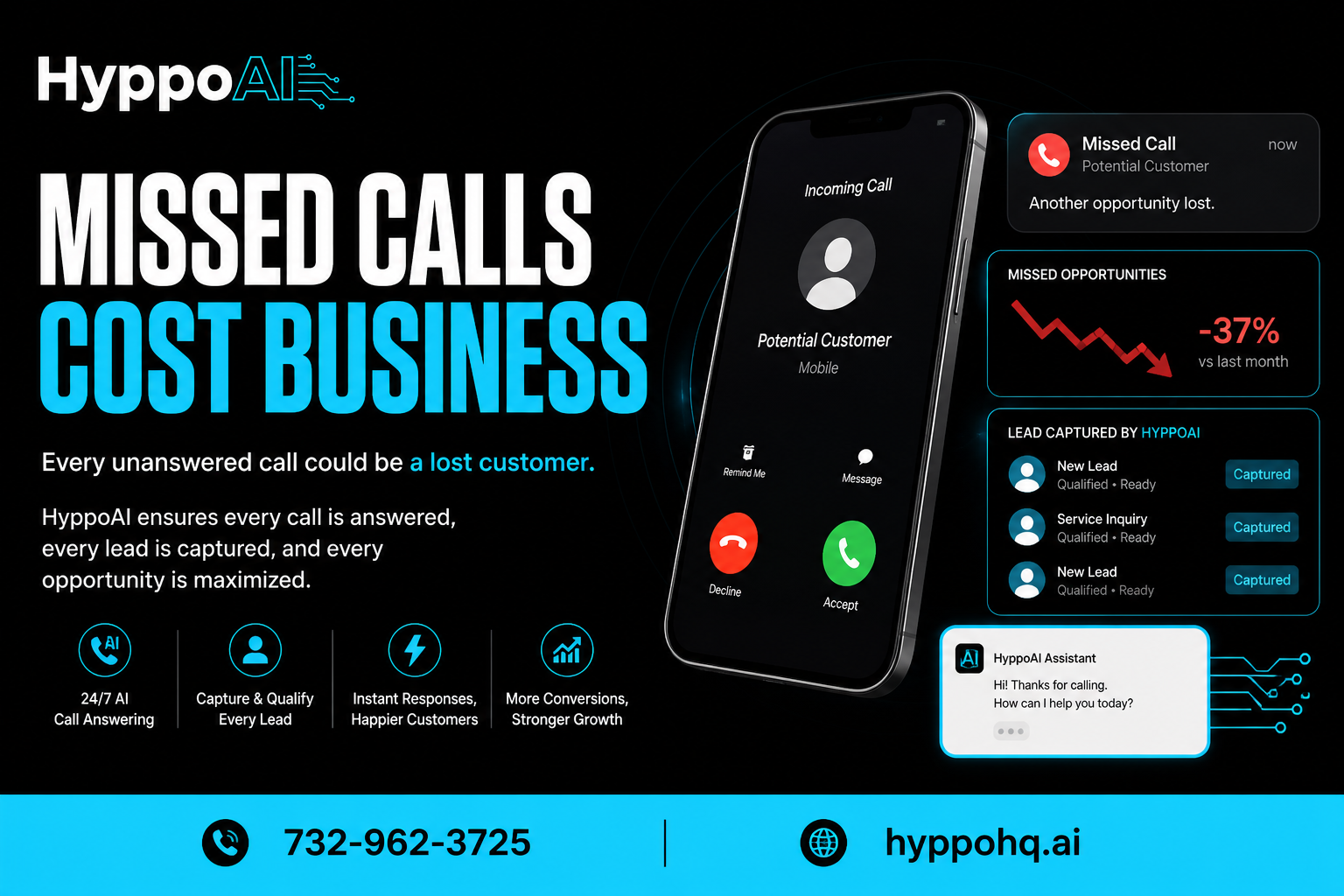
What happens when a customer call goes unanswered
Every missed customer call creates a ripple effect.
It may look small in the moment. A phone rings, no one picks up, and the business plans to call back later. But from the customer’s perspective, that unanswered call often signals something bigger: delay, uncertainty, or a lack of availability.
For small and midsize businesses, that gap can be expensive.
When a customer call goes unanswered, you are not only missing a conversation. You may be missing a lead, a sale, a booking, a repeat customer, or a referral. In many cases, the caller does not wait around for a callback. They move on to the next business that answers first.
The immediate impact of an unanswered call
The first thing that happens is simple: the customer experiences friction.
They had a reason for calling. Maybe they wanted pricing, scheduling, support, or urgent help. If no one answers, their momentum drops. The easier you make it for someone to get help, the more likely they are to buy. The harder you make it, the more likely they are to leave.
Here is what often happens next:
- The caller hangs up without leaving a voicemail
- They call a competitor right away
- They assume your business is too busy or disorganized
- They postpone the decision and never return
- They leave with a weaker impression of your brand
In other words, silence creates doubt.
Missed calls often mean missed revenue
Not every unanswered call is a lost customer, but many are lost opportunities.
For service-based businesses especially, inbound calls are often high-intent. These are not casual visitors scrolling past a post. These are people taking action. They are reaching out because they need something now.
If that call is missed, revenue can disappear in several ways:
Lost new leads
A first-time caller may be ready to book, ask for an estimate, or confirm availability. If they cannot connect quickly, they may choose another provider.
Lost repeat business
Existing customers expect responsiveness. If they cannot get through, they may begin looking elsewhere, especially if the issue is time-sensitive.
Lower close rates
Speed matters. The longer the delay between the customer reaching out and your response, the colder the lead becomes.
Reduced lifetime value
One missed call can affect more than one transaction. It can cost future purchases, renewals, and word-of-mouth referrals.
Customer trust starts to weaken
Trust is built in small moments.
Answering the phone is one of those moments. It shows presence, reliability, and readiness to help. When calls go unanswered, customers may question whether your business is dependable.
That does not mean every missed call ruins your reputation. But repeated missed calls create patterns, and customers notice patterns quickly.
They may ask themselves:
- If they cannot answer now, will they be responsive later?
- If I become a customer, will support be hard to reach?
- Is this business organized enough to handle my needs?
These are brand questions, not just phone questions.
Operational problems become more visible
Unanswered calls are often a symptom of a larger operational issue.
Maybe your front desk is overloaded. Maybe your team is juggling too many channels. Maybe calls spike after hours, during lunch, or while staff are on-site with customers. Maybe important inquiries are getting buried in voicemail.
When that happens, the problem is not just call volume. It is system design.
Common causes include:
- Limited staff availability
- No after-hours coverage
- No call routing or overflow handling
- Slow voicemail follow-up
- No process for qualifying and logging callers
- Disconnected communication between phone, CRM, and scheduling
If unanswered calls happen often, the business usually needs a stronger intake and follow-up system.
The customer journey breaks earlier than most teams realize
Many businesses think the sales process starts when a rep follows up.
In reality, it starts when the customer first tries to make contact.
That first call is part of the experience. If the experience is broken at the beginning, the rest of the journey becomes harder. Even if your team calls back later, the customer may already be less engaged.
A delayed response can create:
- More objections
- Lower urgency
- Less trust
- More comparison shopping
- More pressure on your team to recover the opportunity
Fast response is not just a convenience. It is part of conversion.
Voicemail is not a reliable safety net
Many businesses assume missed calls are manageable because callers can leave a voicemail.
The problem is that many people do not.
Some callers do not want the extra step. Some are in a hurry. Some assume a callback will take too long. Others simply move on.
Even when voicemails are left, follow-up can break down if:
- Messages are incomplete
- Staff check voicemail inconsistently
- Notes are not captured clearly
- Callbacks happen hours later instead of minutes later
Voicemail can help, but it is not the same as answering in the moment.
What businesses should measure
If you want to understand the cost of unanswered calls, start with visibility.
Track the basics:
- Total inbound calls
- Missed call rate
- Time of day missed calls happen most
- Callback time
- Booking or close rate after callback
- Percentage of callers who never reconnect
These numbers can reveal whether your business has a staffing issue, a process issue, or a technology gap.
Without measurement, missed calls stay invisible. With measurement, they become solvable.
How AI can help reduce unanswered calls
For SMBs, the challenge is not always effort. Often, it is coverage.
Teams are busy. Owners are stretched. Front-office staff are balancing calls, walk-ins, admin work, and scheduling. That is where AI voice automation can help support the business without replacing the human experience entirely.
An AI receptionist or voice system can help by:
- Answering calls instantly
- Capturing caller details
- Handling common questions
- Routing urgent requests
- Qualifying leads
- Logging information for follow-up
- Covering after-hours and overflow periods
The goal is not to add complexity. It is to reduce drop-off at the first point of contact.
For many businesses, that means fewer missed opportunities and a more consistent customer experience.
The real question is not whether missed calls happen
Every business misses calls sometimes.
The real question is what happens next.
If there is no system behind the missed call, the business relies on memory, manual callbacks, and luck. That creates inconsistency. If there is a clear process or automated support in place, the business has a better chance of saving the opportunity.
A strong response strategy includes:
Immediate answer coverage
Use systems that reduce the chance of a call going unanswered in the first place.
Fast follow-up
If a call is missed, respond quickly while intent is still high.
Clear intake
Capture the reason for the call, urgency, and contact details accurately.
Smart routing
Direct sales, support, and urgent requests to the right next step.
Reporting
Review call patterns and improve where drop-offs happen most.
Final takeaway
When a customer call goes unanswered, the impact is rarely limited to one ring and one missed moment. It can affect trust, conversions, operations, and long-term growth.
For SMBs, improving phone response is often one of the simplest ways to protect revenue and create a better customer experience. If your team is missing calls during busy hours, after hours, or when staff are tied up, it may be time to rethink the system behind the phone.
If you want to explore how HyppoAI helps businesses handle calls more efficiently with AI, visit https://hyppohq.ai or call +17329623725.
