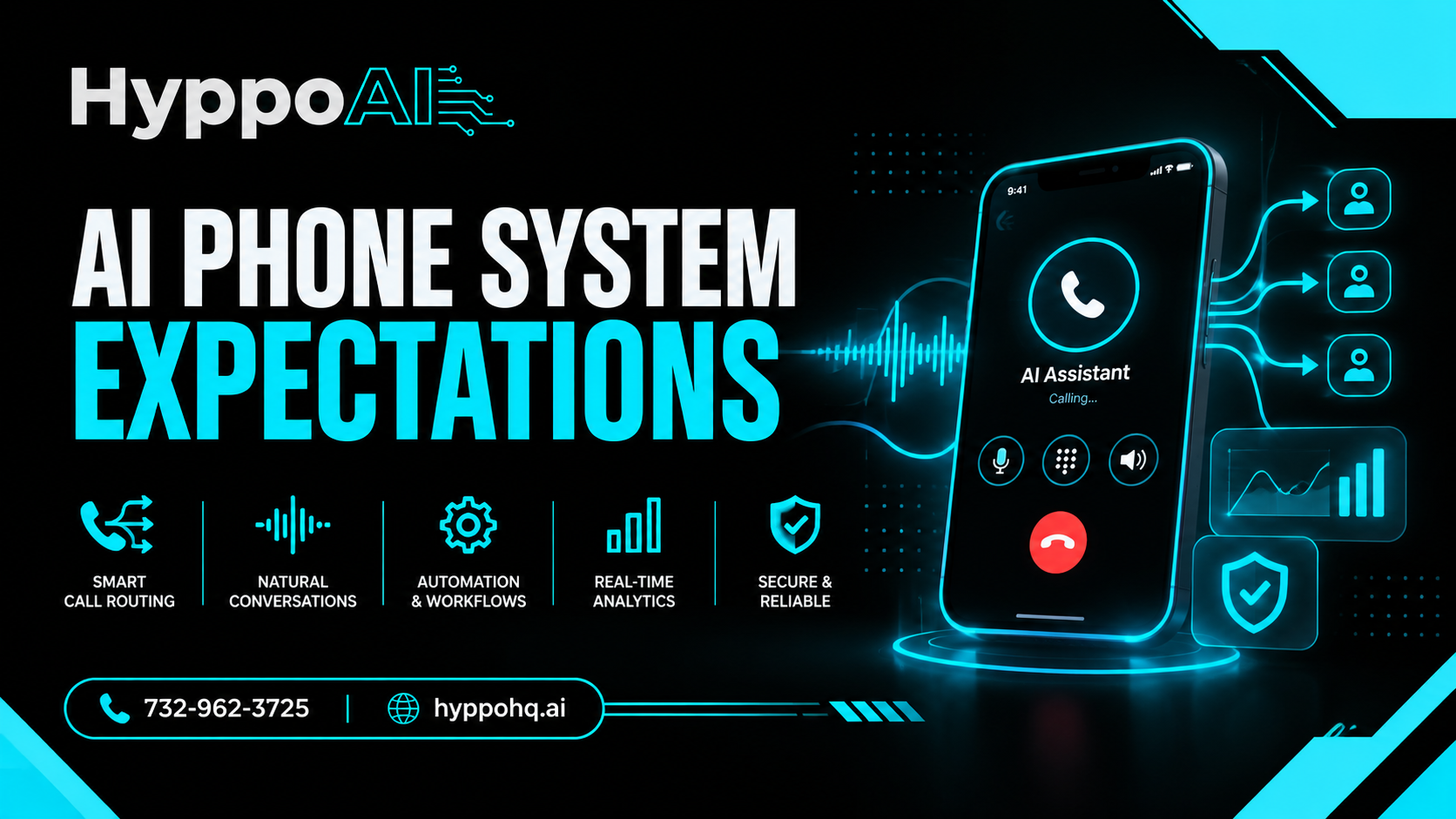
What businesses expect from AI phone systems today
AI phone systems have moved well beyond simple auto-attendants and rigid phone trees. Today, businesses expect them to do real work: answer fast, qualify leads, route conversations, reduce missed opportunities, and support a better customer experience without adding headcount.
For small and midsize businesses, the standard has changed. An AI phone system is no longer judged only by whether it can pick up the phone. It is judged by whether it helps the business operate more efficiently, respond more consistently, and convert more inbound demand.
Here is what businesses expect from AI phone systems today, and why those expectations matter.
Fast answers without friction
The first expectation is simple: answer the phone quickly and keep the interaction easy.
Customers do not want to sit through long menus, repeat themselves, or wait on hold for basic information. Businesses know that every extra second of friction increases the chance of a hang-up, a lost booking, or a lead going to a competitor.
That means modern AI phone systems are expected to:
- answer calls instantly or near instantly
- understand natural speech
- respond conversationally
- handle common questions without transfers
- route urgent calls correctly
Speed matters, but so does flow. Businesses want an experience that feels smooth, not robotic. If the system creates confusion, it becomes a liability instead of an asset.
Reliable lead capture every time
Missed calls are missed revenue. That is why one of the biggest expectations today is dependable lead capture.
Businesses want AI phone systems to do more than greet callers. They want them to collect the information needed to move a conversation forward, even when staff are busy, after hours, or unavailable.
What reliable capture looks like
A useful AI phone system should be able to capture:
- caller name and contact details
- reason for the call
- service interest or intent
- preferred callback time
- urgency level
- appointment or booking details when relevant
The key expectation is consistency. Businesses do not want leads slipping through the cracks because someone missed a call during lunch, after hours, or during a busy period.
Better customer experience, not just automation
Businesses are increasingly aware that automation alone is not the goal. The goal is a better experience.
A customer calling a business often has a specific need: book a service, ask a question, check availability, or get help. If the AI phone system makes that easy, it adds value. If it creates friction, it damages trust.
That is why businesses now expect AI phone systems to sound helpful, clear, and brand-appropriate. They want technology that supports the customer relationship rather than getting in the way of it.
Businesses want AI to handle common conversations like:
- business hours and location questions
- service availability
- pricing basics where appropriate
- appointment requests
- call routing by department or need
- after-hours intake
The expectation is not perfection in every edge case. It is competence in the conversations that happen most often.
Integration with existing workflows
A phone system that works in isolation is no longer enough. Businesses expect AI phone systems to fit into the tools they already use.
If call details stay trapped inside one platform, the operational value is limited. Teams need information to flow into their workflow so they can follow up fast and stay organized.
Common integration expectations
Businesses often want AI phone systems to connect with:
- CRM platforms
- calendars and scheduling tools
- help desk systems
- internal notifications
- lead management workflows
- reporting dashboards
This matters because the phone call is only one step in the customer journey. If a lead is captured but no one sees it quickly, the business still loses time and momentum.
Accurate routing and escalation
Businesses expect AI phone systems to know when to help and when to hand off.
Not every call should stay with automation. Some calls need a human immediately. Others can be resolved by AI in seconds. The expectation today is intelligent routing based on caller intent, urgency, and business rules.
For example, businesses may want the system to:
- route sales inquiries differently from support requests
- escalate urgent issues to a live person
- send after-hours calls into a structured intake flow
- prioritize existing customers or high-value leads
The more accurately the system routes calls, the more useful it becomes operationally.
Clear reporting and measurable value
Businesses want proof that the system is working.
That means AI phone systems are expected to provide visibility into performance, not just basic call logs. Leaders want to know whether the system is reducing missed calls, improving response times, and helping capture more opportunities.
Metrics businesses care about
Common expectations include reporting on:
- total calls answered
- missed call reduction
- lead capture rate
- call reasons and trends
- after-hours activity
- booking or conversion outcomes where available
This reporting helps businesses make better decisions. It also makes it easier to evaluate return on investment instead of relying on guesswork.
Availability beyond business hours
Today, customers expect businesses to be responsive even when the office is closed. Businesses know this, which is why 24/7 availability has become a major expectation from AI phone systems.
That does not mean every issue gets fully resolved at midnight. It means the caller can still be helped, acknowledged, and captured.
For many SMBs, this is one of the biggest practical wins. An AI phone system can create continuity when the team is off the clock, helping the business stay responsive without requiring someone to be on call at all times.
Easy setup and practical management
Businesses want powerful systems, but they do not want complexity for its own sake.
A modern AI phone system is expected to be manageable. Teams want to update call flows, adjust routing, refine answers, and review outcomes without turning every change into a technical project.
This is especially important for SMBs. They need solutions that are practical, not bloated. If a system is too hard to maintain, adoption drops and value fades.
Brand fit and conversational quality
How the system sounds matters.
Businesses increasingly expect AI phone systems to reflect their brand in tone and clarity. A law office, a home service company, and a medical practice may all need different conversational approaches. Even when the goal is efficiency, businesses do not want generic interactions that feel disconnected from how they serve customers.
A good AI phone experience should feel:
- direct
- clear
- professional
- consistent
- easy to follow
That expectation is growing as customers become more familiar with AI and less tolerant of clunky experiences.
What this means for SMBs
For SMBs, the expectations around AI phone systems are practical. Businesses are not looking for novelty. They are looking for outcomes.
They want systems that help them:
- reduce missed opportunities
- improve responsiveness
- support lean teams
- create more consistent customer interactions
- save staff time on repetitive call handling
- keep lead flow organized
In short, businesses expect AI phone systems to function like a real operational tool, not just a voice layer on top of a phone line.
The new standard for AI phone systems
The standard today is clear. Businesses expect AI phone systems to be fast, reliable, useful, and measurable. They want systems that answer calls, capture demand, support customers, and plug into the way the business already runs.
That is the shift. The question is no longer whether AI can answer the phone. The question is whether it can help the business perform better.
If you are evaluating AI phone systems for your business, focus on the essentials: customer experience, lead capture, routing, integration, reporting, and ease of use. Those are the capabilities that matter most in real operations.
Want to see how AI voice automation can support your business? Visit HyppoAI at https://hyppohq.ai or call +17329623725 to learn more.
