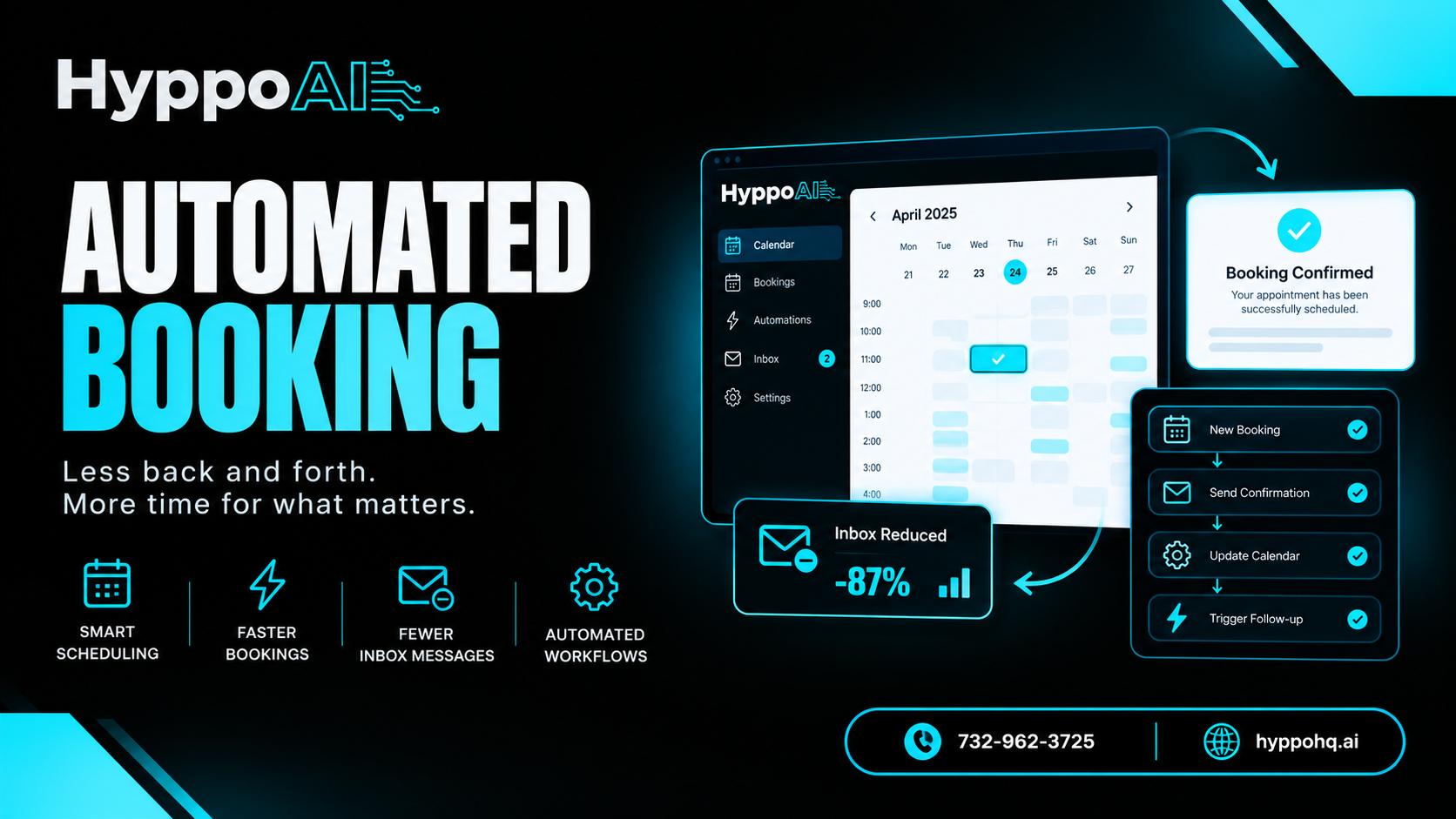
How automated booking reduces back-and-forth for SMBs
Manual scheduling looks simple until your team is buried in messages, missed calls, and calendar confusion. For small and midsize businesses, that back-and-forth adds up fast. Every extra text, email, voicemail, and follow-up creates friction that can cost you time, energy, and even revenue.
Automated booking solves that problem by removing unnecessary steps from the scheduling process. Instead of asking prospects when they are free, checking calendars manually, and going back again with alternatives, businesses can let customers choose from real availability in seconds.
For SMBs, this is not just about convenience. It is about speed, consistency, and creating a smoother path from interest to appointment.
Why scheduling back-and-forth hurts growth
When booking depends on manual coordination, simple appointments turn into long conversations. A lead reaches out. Your team responds later. The customer replies when they can. A time no longer works. The cycle repeats.
That delay creates several business problems:
- Leads lose momentum
- Staff spend valuable time on low-leverage admin work
- Double-bookings and errors become more likely
- Missed calls turn into missed opportunities
- Customers get frustrated before the relationship even starts
For service businesses especially, fast response matters. If someone is ready to book now, they do not want a five-message exchange just to find a time slot.
How automated booking works
Automated booking tools connect customer inquiries with your real calendar availability. Instead of relying on a team member to coordinate times manually, the system presents open slots and confirms appointments automatically.
Depending on the setup, automated booking can work through:
- Website scheduling forms
- AI chat tools
- Text message flows
- Email follow-up sequences
- Voice assistants or AI receptionists
The goal is simple: reduce friction between interest and action.
A customer asks to book. The system offers available times. The customer chooses one. The appointment is confirmed. Reminders can follow automatically.
That is a major upgrade from the traditional process of checking availability, replying manually, and hoping the lead still responds.
The biggest ways automated booking reduces back-and-forth
1. It eliminates unnecessary scheduling messages
The most obvious benefit is fewer emails, texts, and phone calls just to lock in a time. Instead of asking, “What works for you?” and waiting, automated booking moves the conversation forward immediately.
This helps your team spend less time coordinating and more time serving customers.
2. It gives customers instant next steps
People want clarity. When someone reaches out, they do not want to wonder what happens next. Automated booking provides an immediate path forward.
That speed matters because quick action often increases conversion. The easier it is to book, the more likely a prospect is to follow through.
3. It reduces delays outside business hours
Leads do not only come in from 9 to 5. Many people research and inquire in the evening, early morning, or during weekends. If booking depends on your staff being available, those leads sit and wait.
Automated booking keeps your business responsive even when your team is offline. That can help capture demand that might otherwise disappear.
4. It cuts down on calendar mistakes
Manual scheduling creates room for human error. A wrong time, missed note, or overlapping appointment can create a poor customer experience.
Automation improves consistency by working from current availability and standardized rules. That means fewer scheduling conflicts and fewer correction messages.
5. It supports better follow-up automatically
Booking is only one part of the process. Good systems also send:
- Confirmation messages
- Reminder texts or emails
- Reschedule options
- Intake instructions if needed
These automated touchpoints reduce no-shows and prevent your staff from having to chase routine details manually.
Why this matters for SMB teams
Large companies can absorb inefficiency with bigger teams. SMBs usually cannot. When a small team spends hours each week on repetitive scheduling tasks, that time comes directly from sales, operations, or customer service.
Automated booking helps SMBs operate with more leverage.
Instead of adding admin burden as demand grows, you create a system that handles routine coordination at scale. That can be especially useful for businesses dealing with:
- High inquiry volume
- Appointment-based services
- Multiple staff calendars
- Missed calls after hours
- Slow lead response times
For many businesses, better booking is not just a workflow improvement. It is a growth improvement.
Where automated booking fits into a broader automation strategy
Automated booking works best when it is connected to the rest of your customer journey. On its own, it reduces scheduling friction. Connected to other systems, it becomes even more powerful.
For example, booking automation can support:
- AI receptionists that answer and route inquiries
- Lead capture from website forms or chat
- Follow-up workflows for unbooked leads
- CRM updates after appointments are scheduled
- Reminder and reactivation campaigns
This creates a smoother operating system for your business, not just a better calendar.
Signs your business needs automated booking
Not every business starts with the same pain points, but there are common signals that manual scheduling is costing too much.
You may need automated booking if:
- Your team spends too much time coordinating appointments
- Leads often go cold before booking
- You get frequent missed calls or after-hours inquiries
- Customers ask for faster scheduling options
- Your calendar process causes confusion or overlap
- Follow-ups are inconsistent
If any of these sound familiar, automation may be one of the simplest ways to improve both customer experience and internal efficiency.
What to look for in an automated booking solution
Not all booking systems are equally useful. The best setup should fit the way your business already works while removing repetitive manual steps.
Look for features like:
- Real-time calendar availability
- Easy website or messaging integration
- Automated confirmations and reminders
- Rescheduling support
- Clear handoff to your team when needed
- Compatibility with your existing workflows
For SMBs, the best solution is usually the one that reduces complexity rather than adding more software overhead.
The bottom line
Automated booking reduces back-and-forth by replacing slow, manual coordination with a faster and more reliable process. It helps businesses respond quicker, book more efficiently, and free up staff time for higher-value work.
For SMBs, that means fewer delays, less admin work, and a better experience for both leads and customers. In a competitive market, making it easier to book is not a small improvement. It is a practical advantage.
If your business is still relying on manual scheduling, now is a good time to rethink the process. HyppoAI helps SMBs simplify operations with practical AI-driven automation. Visit https://hyppohq.ai or call +17329623725 to learn how smarter booking workflows can reduce friction and help your business scale.
