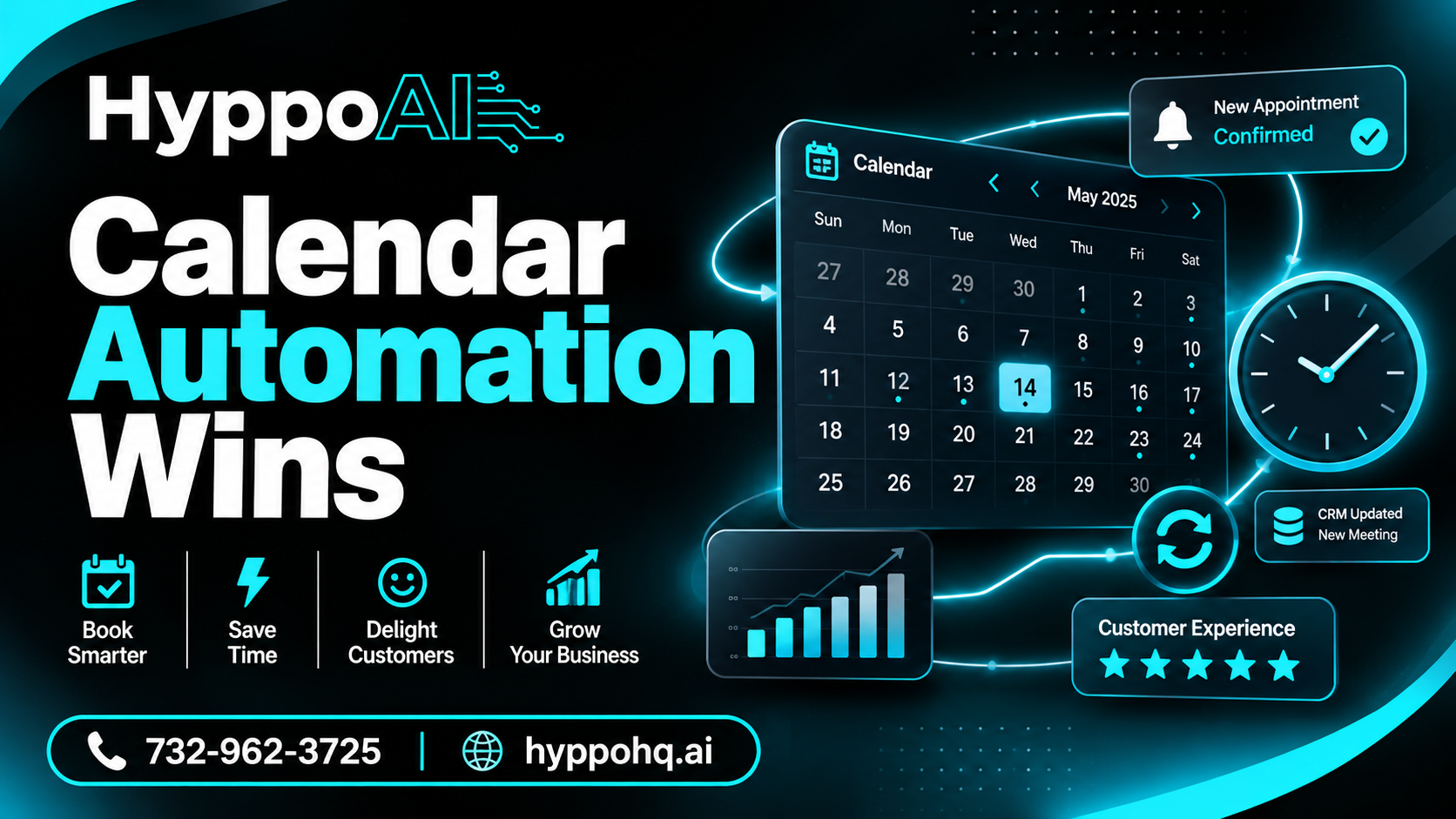
Calendar automation improves customer experience for SMBs
Customer experience often comes down to simple moments.
How fast can someone book? How easy is it to reschedule? Do they get reminders? Does the business actually show up prepared?
That is why calendar automation matters. It is not just a scheduling upgrade. It is a customer experience upgrade.
For small and midsize businesses, every interaction shapes trust. When scheduling feels slow, confusing, or inconsistent, customers notice. When it feels seamless, they notice that too.
What calendar automation actually means
Calendar automation is the use of software and AI-driven workflows to manage appointments, availability, confirmations, reminders, follow-ups, and internal coordination with less manual effort.
Instead of relying on back-and-forth calls, texts, or emails, businesses can automate key steps in the scheduling process.
That often includes:
- Real-time booking based on availability
- Automatic confirmations
- Reminder messages by text or email
- Rescheduling links
- Calendar syncing across team members
- Follow-up communication after the appointment
- Internal alerts and task creation
The result is a smoother process for both the customer and the business.
Why customers care about scheduling more than you think
Customers do not separate scheduling from service. To them, scheduling is part of the service.
If booking an appointment takes too long, they may assume the business is disorganized. If they do not receive reminders, they may forget the appointment or feel unsupported. If they have to call multiple times to make a simple change, frustration builds fast.
A strong customer experience starts before the actual appointment ever happens.
First impressions happen at booking
The booking process is often the first real operational interaction a customer has with your business.
A modern experience feels:
- Fast
- Clear
- Convenient
- Professional
A manual experience often feels:
- Delayed
- Uncertain
- Repetitive
- Frustrating
Calendar automation helps businesses create a first impression that feels organized and reliable.
How calendar automation improves customer experience
There are several direct ways automation improves the customer journey.
1. Faster booking reduces friction
Customers want answers now. They do not want to wait for a callback just to find a time slot.
With calendar automation, available times can be presented instantly. That reduces unnecessary back-and-forth and helps customers take action while intent is high.
This matters because convenience drives conversion. The easier it is to book, the more likely a prospect becomes a customer.
2. Fewer errors build trust
Manual scheduling creates room for mistakes.
Common issues include:
- Double bookings
- Missed details
- Wrong dates or times
- Appointments assigned to the wrong team member
Automation reduces these risks by standardizing the process and syncing calendars in real time. Customers get more accurate information, and that consistency builds confidence.
3. Automated reminders reduce no-shows
People are busy. Even interested customers forget appointments.
Automated reminders improve the experience because they are genuinely helpful. A well-timed reminder gives customers what they need without making them do extra work.
It also helps businesses reduce no-shows, which protects revenue and keeps schedules running efficiently.
A better experience for the customer often creates a better outcome for the business too.
4. Rescheduling becomes simple instead of stressful
Plans change. Customers do not want to feel trapped by an appointment they can no longer make.
Calendar automation can provide simple options to reschedule without forcing a phone call or long email thread. That flexibility makes the experience feel more customer-friendly.
When businesses make changes easy, customers are more likely to stay engaged instead of dropping off.
5. Better internal coordination leads to better service
Customer experience is not only about what the customer sees. It is also shaped by what happens behind the scenes.
When calendars are connected to internal workflows, teams can prepare better.
For example, automation can help ensure:
- Staff know who is coming and when
- Appointment notes are accessible
- Follow-up tasks are triggered automatically
- Capacity is managed more effectively
That means customers are less likely to encounter confusion, delays, or repeated questions.
6. Follow-up feels timely and professional
The customer experience does not end when the appointment does.
Automated follow-up can help businesses send:
- Thank-you messages
- Review requests
- Next-step instructions
- Rebooking prompts
- Support information
This keeps communication consistent and helps customers feel remembered, not forgotten.
The business impact of a better scheduling experience
Improving customer experience is not just about being nice. It affects real business outcomes.
When scheduling is easy and reliable, businesses often see improvements in:
- Lead conversion
- Customer satisfaction
- Retention
- Review quality
- Staff efficiency
- Appointment attendance
For SMBs, that matters. Small operational improvements can create a noticeable competitive advantage.
A business that responds quickly and schedules smoothly often wins against one that does not, even if both offer similar core services.
Where AI makes calendar automation even stronger
Basic automation is powerful. AI can make it even more useful.
AI-enhanced scheduling systems can help businesses manage communication more intelligently, respond faster, and support customers outside normal business hours.
That may include:
- Conversational booking assistance
- Smart routing based on appointment type
- Automated responses to common scheduling questions
- Better handling of inbound demand after hours
- More personalized follow-up workflows
For SMBs, this can create a customer experience that feels responsive without requiring constant manual attention.
Signs your current scheduling process is hurting customer experience
Many businesses do not realize their calendar process is creating friction.
Watch for these warning signs:
- Customers frequently call just to confirm appointments
- Team members spend too much time scheduling manually
- No-shows are common
- Rescheduling is clunky
- Response times are slow after hours
- Customers complain about communication gaps
- Staff miss updates because systems are disconnected
If any of these sound familiar, calendar automation may be one of the simplest ways to improve service quality.
What SMBs should prioritize first
You do not need to automate everything at once.
Start with the highest-impact parts of the scheduling journey:
- Online or automated booking
- Confirmation and reminder workflows
- Easy rescheduling options
- Calendar syncing across tools and team members
- Post-appointment follow-up
The goal is not complexity. The goal is consistency.
When the scheduling experience becomes predictable, fast, and easy, customers feel it immediately.
Final thoughts
Calendar automation improves customer experience because it removes friction from one of the most important parts of the customer journey. It helps businesses respond faster, reduce errors, stay organized, and communicate more clearly.
For SMBs, that is a practical win. Customers get convenience and confidence. Teams get efficiency and better control. The business gets a stronger system for growth.
If your scheduling process still depends on too much manual work, now is a smart time to improve it. Visit HyppoAI at https://hyppohq.ai or call +17329623725 to explore smarter automation for your business.
