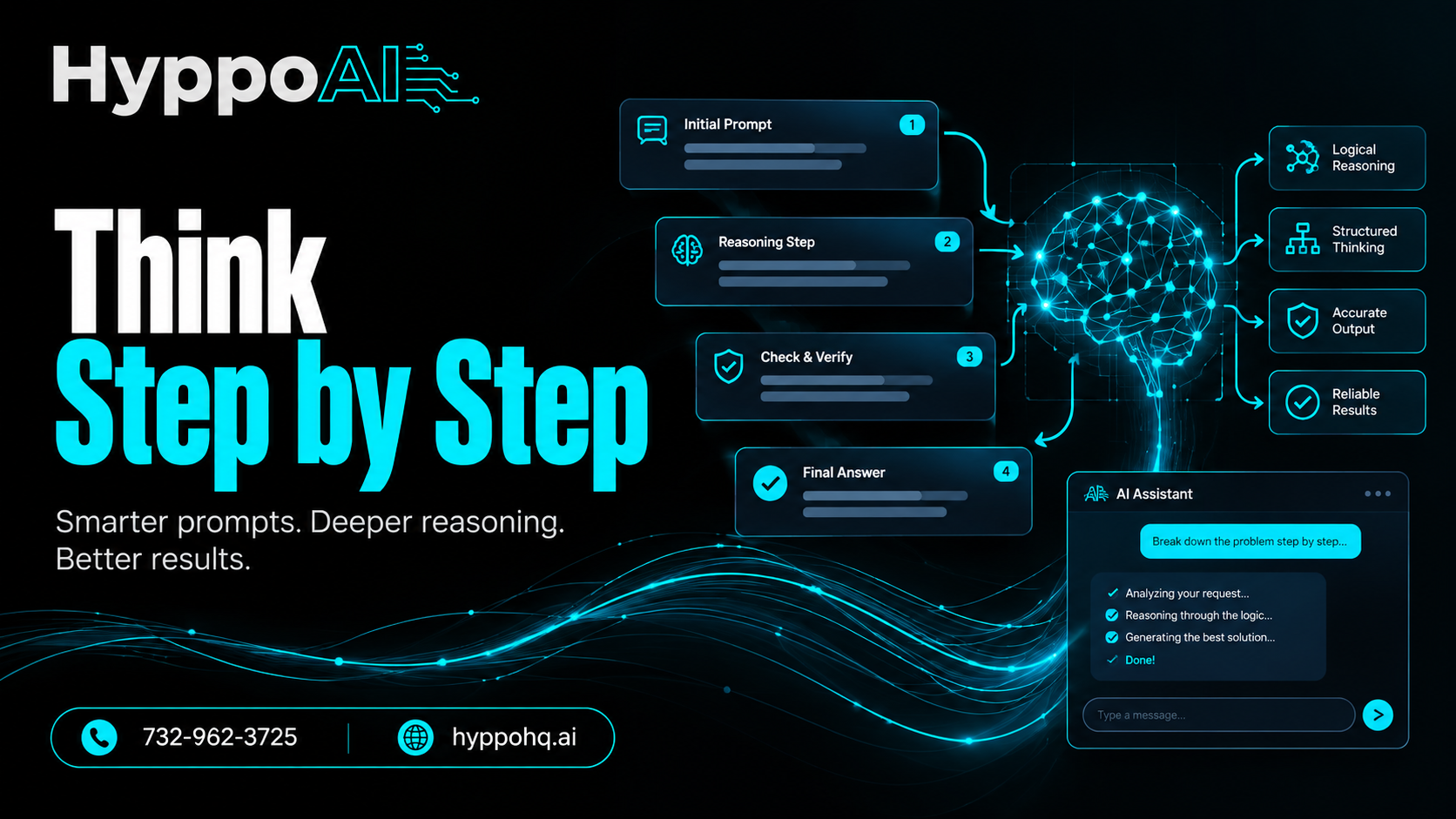
How to ask ChatGPT to think step by step internally
Many people want to know how to ask ChatGPT to think step by step internally. The goal is simple: get better answers, fewer mistakes, and more useful output.
There is one important catch. You should not rely on trying to force hidden reasoning to appear. A better approach is to ask for a clear, accurate result, define the task well, and request a concise explanation or structured output when needed.
For businesses, this matters because better prompts save time. If your team uses AI for research, writing, customer support, or operations, prompt quality directly affects output quality.
What people mean by “think step by step internally”
Usually, they want ChatGPT to:
- reason more carefully
- avoid rushing to a shallow answer
- check assumptions
- produce a stronger final result
- show only the useful conclusion, not a long messy process
That is a smart goal. But the best way to get there is not to demand hidden chain-of-thought. Instead, ask for deliberate reasoning behavior through the structure of your prompt.
The better way to prompt for stronger reasoning
If you want stronger answers, focus on these elements:
1. Define the objective clearly
Start with the exact outcome you want.
Examples:
- “Summarize this article for a busy business owner in 5 bullet points.”
- “Compare these software options for a 10-person service business.”
- “Draft a client email that is direct, professional, and under 150 words.”
A vague prompt creates vague output. A specific prompt improves reasoning because the model has a clear target.
2. Provide context
ChatGPT performs better when it knows the situation.
Useful context includes:
- who the audience is
- what industry you are in
- what constraints matter
- what success looks like
- what information should be prioritized
For example, a small business owner and an enterprise operations team may need very different answers to the same question.
3. Add constraints
Constraints improve quality. They reduce rambling and force useful structure.
Common constraints include:
- word count
- tone
- format
- timeline
- budget
- tools allowed
- level of detail
Example:
“Give me a recommendation in 3 bullet points, then a short explanation under 100 words.”
4. Ask for a structured response
A structured output often leads to better reasoning.
Try formats like:
- bullet points
- pros and cons
- ranked list
- table
- step-by-step action plan
- summary followed by recommendation
Instead of asking the model to reveal every internal step, ask it to present the result in a format that makes the logic easy to follow.
Prompt examples that work better
Here are practical alternatives to “think step by step internally.”
For analysis
Use:
“Analyze this carefully, check for weak assumptions, and give me the best final answer. Keep the explanation concise.”
Why it works: It asks for care and accuracy without demanding hidden reasoning.
For decision support
Use:
“Compare these three options based on cost, ease of use, and expected ROI. Recommend one for a small business and explain why in 3 bullet points.”
Why it works: It defines criteria, audience, and output format.
For writing
Use:
“Draft this email, then revise it for clarity, brevity, and professionalism. Return only the final version.”
Why it works: It encourages an internal quality pass while keeping the output clean.
For problem solving
Use:
“Work through this carefully and identify the most likely solution. If assumptions are required, state them briefly before the answer.”
Why it works: It asks for thoughtful reasoning and transparent assumptions.
What to avoid
Some prompt habits create worse results, not better ones.
Avoid vague instructions
Prompts like these are weak:
- “Think harder.”
- “Do better.”
- “Use advanced reasoning.”
They are too abstract. The model needs direction, not intensity.
Avoid overloading one prompt
If you ask for research, strategy, writing, editing, and formatting all at once, quality may drop.
Break complex tasks into stages:
- research first
- evaluate second
- draft third
- refine last
Avoid assuming confidence equals correctness
A polished answer can still be wrong. For important work, verify facts, numbers, citations, and business assumptions.
A simple prompt formula you can reuse
Here is a practical formula for better results:
Task + context + constraints + output format + quality check
Example:
“Create a short LinkedIn post for a service business owner about missed calls hurting revenue. Keep the tone direct and confident. Use under 120 words, include 3 hooks to choose from, and make sure the final copy is clear and non-repetitive.”
This formula works because it gives the model a job, a setting, boundaries, and a standard.
When to ask for explanation versus final answer only
Sometimes you want the reasoning. Sometimes you just want the result.
Ask for an explanation when:
- you are learning a topic
- you need to justify a recommendation
- you want to spot assumptions
- you are comparing options
Ask for final answer only when:
- you need clean copy
- you want a polished email or message
- you are generating content for direct use
- the intermediate reasoning is not useful
A good prompt can specify this directly:
- “Show a brief rationale, then the answer.”
- “Return only the final version.”
- “Give me the recommendation first, then 3 supporting points.”
Why this matters for SMBs
For small and mid-sized businesses, AI should reduce friction, not create more of it. Better prompting helps teams:
- save time on repetitive tasks
- improve first-draft quality
- make faster decisions
- create more consistent customer communication
- reduce back-and-forth edits
That is especially valuable when you are running lean and every hour matters.
Best practices for more reliable ChatGPT outputs
Use this checklist before you send a prompt:
- Is the task specific?
- Did I include enough context?
- Did I define the audience?
- Did I set format and length constraints?
- Did I ask for the kind of answer I actually need?
- Should this be one prompt or multiple steps?
- Do I need verification for facts or numbers?
These small improvements often make a major difference.
Final takeaway
If you want to ask ChatGPT to think step by step internally, the most effective approach is to prompt for careful analysis, clear criteria, useful structure, and a strong final answer. Do not chase hidden reasoning. Design better prompts instead.
That shift leads to more accurate, usable, business-ready output.
If your business wants practical AI systems that save time and improve operations, HyppoAI helps SMBs put AI to work in the real world. Visit https://hyppohq.ai or call +17329623725 to learn more.
