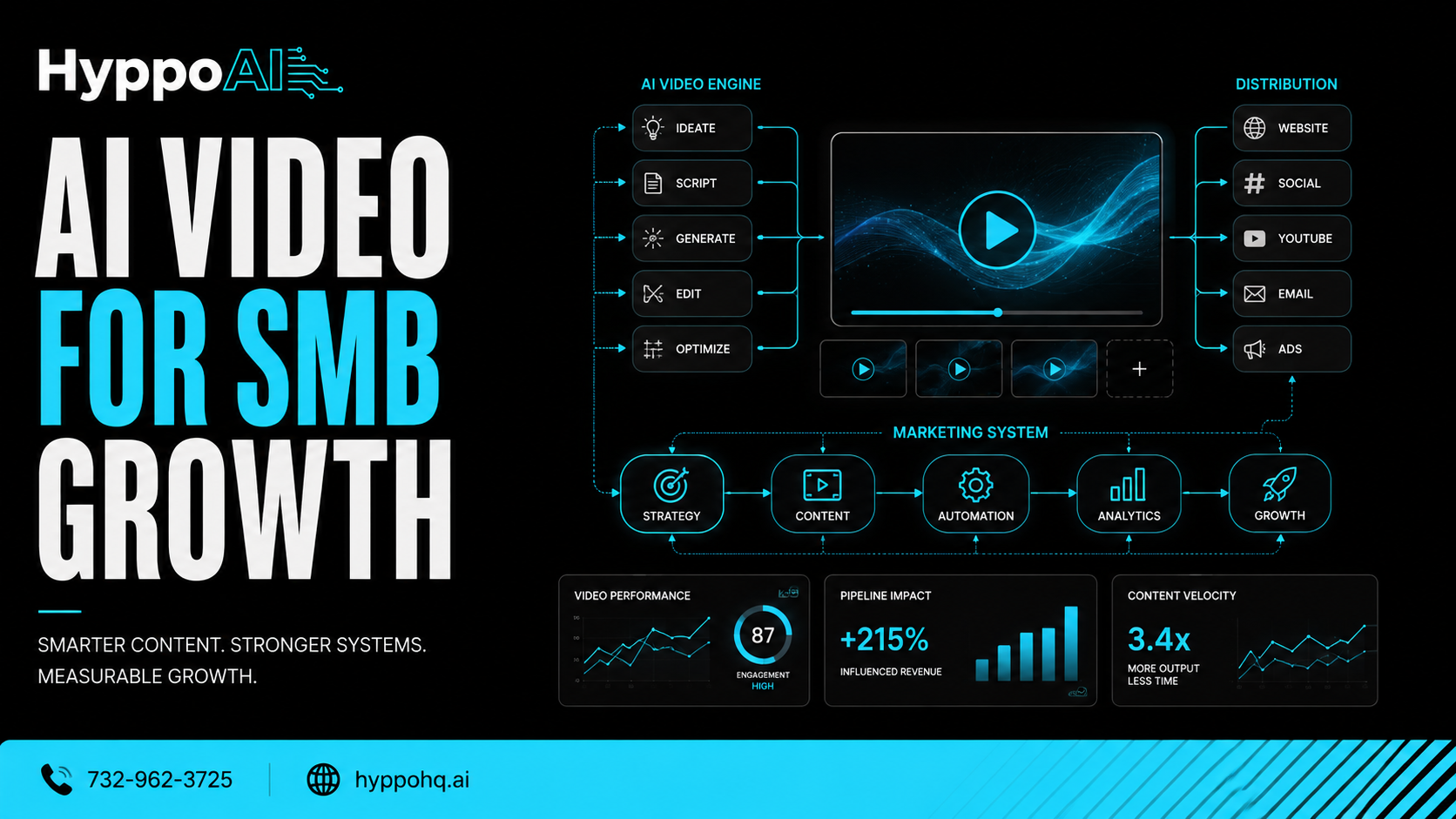
AI video in modern marketing systems for SMB growth
AI video is becoming a practical part of modern marketing, especially for small and midsize businesses that need more output without adding more complexity.
The mistake is treating AI video like a magic shortcut.
It is not a full marketing strategy on its own. It is a production and distribution tool that works best when it fits into a larger system. When used the right way, AI video can help a business create more content, keep messaging consistent, and support campaigns across multiple channels.
For SMBs, that matters.
Marketing systems break when content is slow to produce, hard to repurpose, or disconnected from lead follow-up. AI video helps solve those bottlenecks when it is placed in the right part of the workflow.
What AI video actually does in a marketing system
At a practical level, AI video helps teams turn ideas, scripts, blog posts, offers, and customer questions into visual content faster.
That content can support multiple goals:
- Brand awareness
- Lead generation
- Nurture sequences
- Sales enablement
- Customer education
- Retention and reactivation
Instead of building every video from scratch, businesses can use AI to speed up scripting, voiceover, editing, clipping, captioning, formatting, and repurposing.
The real value is not just speed. It is system alignment.
When AI video is connected to your messaging, funnel stages, and follow-up process, it becomes a repeatable asset instead of a random content experiment.
Where AI video fits best
AI video works best at points in the marketing system where consistency and volume matter.
Top of funnel content
This is often the easiest place to start.
Short-form videos can turn one core idea into multiple pieces of content for social media, ads, and awareness campaigns. A single topic can become:
- A short explainer video
- A quote clip
- A problem-solution reel
- A FAQ video
- A version for paid ads
This helps businesses stay visible without rebuilding the creative process every week.
Middle of funnel education
Many leads are interested but not ready to buy yet.
AI video can support this stage by turning useful information into digestible content, such as:
- Service explainers
- Process walkthroughs
- Case study summaries
- Objection-handling videos
- Product comparison content
This is where video starts doing more than driving views. It starts reducing friction.
Sales and follow-up support
Modern marketing systems do not stop at content publishing.
AI video can support the handoff from marketing to sales by helping businesses create:
- Personalized outreach templates
- Follow-up video sequences
- Appointment reminder content
- Onboarding explainers
- Proposal support videos
When prospects hear the same clear message across channels, trust builds faster.
Customer success and retention
A strong marketing system includes the customer after the sale.
AI video can help businesses educate clients, answer repeat questions, and reinforce value after onboarding. This improves the customer experience while reducing repetitive manual communication.
Why AI video matters for SMBs
Large brands often have dedicated teams for content, editing, and campaign management. SMBs usually do not.
That is why AI video is useful. It lowers the production burden.
For a growing business, the challenge is rarely a lack of ideas. The challenge is turning those ideas into consistent output without slowing down operations.
AI video helps SMBs:
- Produce more content from existing assets
- Keep messaging consistent across platforms
- Shorten time from idea to publish
- Support campaigns with fewer manual steps
- Repurpose one message into many formats
- Maintain visibility without constant custom production
This makes AI video less about novelty and more about operational leverage.
What AI video should connect to
If AI video is going to perform well, it needs to plug into the rest of the system.
That includes:
Messaging
If the offer is unclear, faster video production will not fix it.
Start with strong positioning, clear audience language, and a defined call to action.
Content strategy
Video should map to business goals, not just trends.
Each piece should support a stage of the customer journey or answer a specific buying question.
Distribution
Publishing is not enough.
A system should define where each video goes, how it is reformatted, and how often it is reused.
Lead capture
Awareness content needs a path forward.
If a video gets attention, there should be a next step tied to a form, booking flow, offer, or follow-up sequence.
Automation and follow-up
This is where many businesses lose momentum.
A good marketing system connects content engagement to email, SMS, CRM updates, remarketing, or appointment workflows.
Without follow-up, content creates activity but not enough outcomes.
Common mistakes to avoid
AI video can be powerful, but only when expectations are realistic.
Here are a few common mistakes:
Treating AI video like a strategy
AI video is a tool inside the system, not the system itself.
Prioritizing volume over clarity
More videos do not help if the message is weak or generic.
Ignoring brand voice
Fast production still needs consistency in tone, positioning, and audience fit.
Publishing without measurement
Track what matters:
- Watch time
- Click-through rate
- Lead conversion rate
- Cost per lead
- Reply or booking rate
Failing to repurpose intelligently
One strong idea should become multiple assets. If every video starts from zero, the system is still inefficient.
A simple framework for using AI video well
For most SMBs, the best approach is simple.
1. Start with one core message
Choose one offer, one pain point, or one frequently asked question.
2. Build a content cluster
Turn that message into several video formats for different platforms and funnel stages.
3. Connect it to a CTA
Make the next step obvious, whether that is a consultation, demo, call, or form fill.
4. Automate the follow-up
Use your systems to respond quickly when someone engages.
5. Review performance and refine
Double down on what converts, not just what gets views.
The bigger picture
The role of AI video in modern marketing systems is simple: it helps businesses move faster without losing structure.
It is most effective when it supports a repeatable process for attracting attention, educating prospects, and driving the next action.
For SMBs, that means AI video should not live in isolation. It should be connected to strategy, operations, and follow-up.
That is where the real return comes from.
If your business is exploring how AI video can fit into a smarter marketing system, HyppoAI can help you think through the operational side, not just the content side. Visit https://hyppohq.ai or call +17329623725 to learn more.
