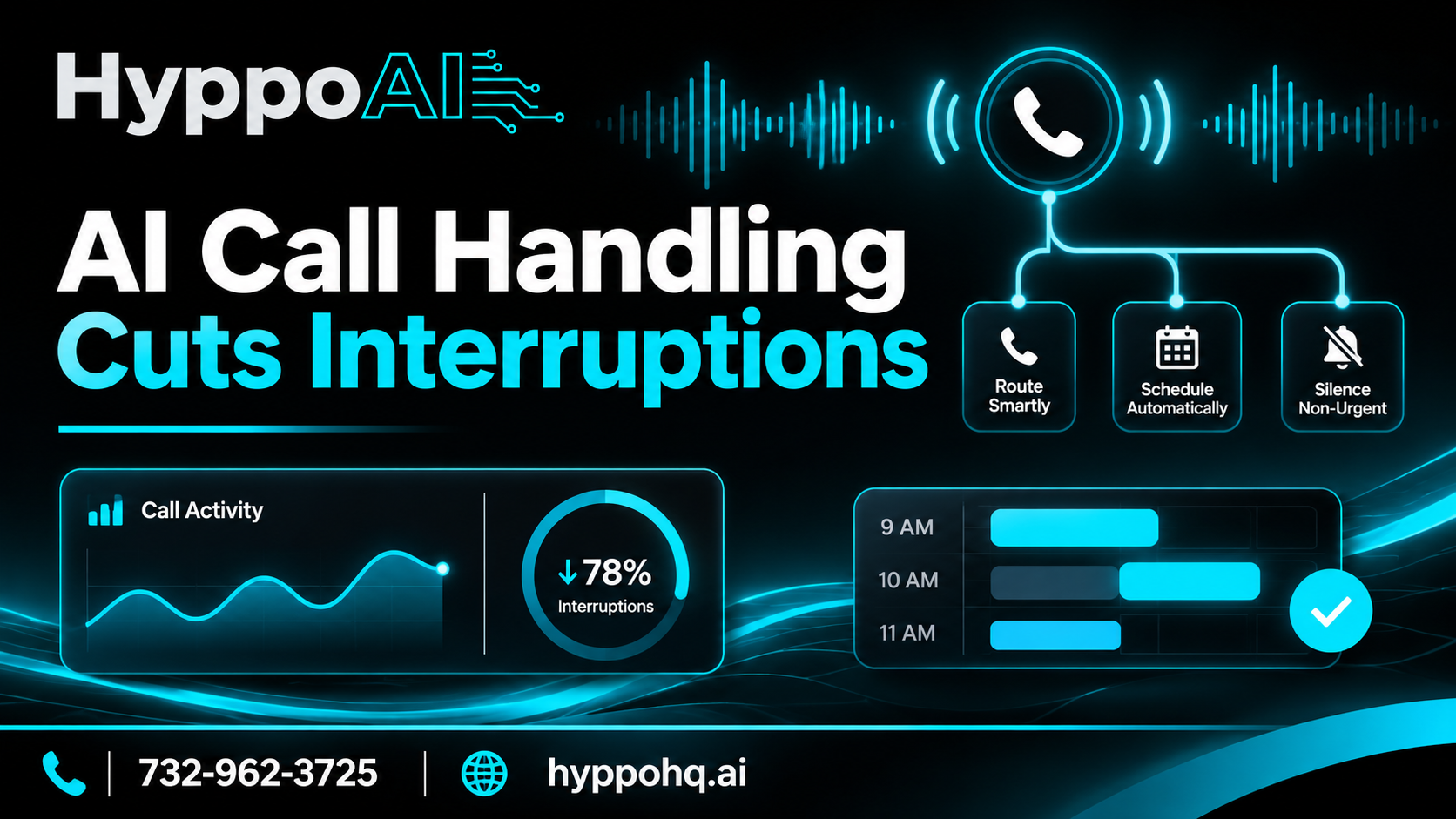
AI call handling reduces interruptions for busy SMB teams
Interruptions cost more than a few seconds. They break concentration, delay important work, and force your team to constantly switch gears throughout the day.
For small and midsize businesses, that problem adds up fast. Every incoming call could be a new lead, a customer question, or an urgent issue. But when every ring pulls someone away from their actual work, productivity suffers.
That is where AI call handling can make a real difference.
Instead of letting phone calls interrupt your team all day, AI can answer, qualify, route, and document conversations automatically. The result is simple: your business stays responsive, and your people stay focused.
Why phone interruptions hurt productivity
Most business owners already know interruptions are frustrating. What is less obvious is how expensive they become over time.
When a team member stops what they are doing to answer a call, several things happen:
- Their current task is paused
- Mental focus is broken
- Follow-up work gets delayed
- Errors become more likely
- The day becomes reactive instead of structured
For SMBs, this is especially painful because teams are lean. One person may be handling sales, customer service, scheduling, and operations all in the same day. A constant stream of calls can turn a productive schedule into nonstop context switching.
Even when calls are important, they do not always need a human to answer first.
What AI call handling actually does
AI call handling uses voice automation to manage incoming calls in a structured, consistent way. Instead of every call reaching your staff directly, the AI acts as the first line of response.
Depending on the setup, it can:
- Answer calls instantly
- Greet callers professionally
- Collect basic information
- Identify the reason for the call
- Qualify leads
- Route urgent issues correctly
- Take messages
- Book appointments
- Provide common answers
- Create call summaries for your team
This does not mean replacing every human interaction. It means removing unnecessary interruptions and making sure the right calls reach the right person at the right time.
How AI call handling reduces interruptions during the day
The biggest advantage of AI call handling is not just answering calls. It is protecting your team’s attention.
1. It filters routine calls before they reach your staff
A large percentage of inbound calls are repetitive. People ask about hours, pricing, availability, location, next steps, or scheduling.
These calls matter, but they often do not require a live team member right away. AI can handle these first-touch interactions automatically, giving callers quick answers while keeping your staff focused on higher-value work.
2. It routes only the calls that truly need human attention
Not every call should interrupt your day. AI can determine whether a call is:
- A new lead
- A support request
- A billing question
- An urgent issue
- A spam or low-priority call
From there, it can send the call to the correct person or workflow. That means fewer random interruptions and more intentional communication.
3. It captures information upfront
One of the biggest time drains is answering a call only to spend the first few minutes gathering basic details.
AI can collect names, phone numbers, business information, appointment preferences, and the purpose of the call before a human ever gets involved. When your team does step in, they start with context instead of starting from scratch.
4. It reduces missed calls without increasing distractions
Many businesses face a tradeoff: either answer every call and lose focus, or ignore calls and risk missing leads.
AI removes that tradeoff.
Calls can be answered immediately without pulling someone away from their current task. Your business remains available, but your team is not forced into constant interruption mode.
5. It creates cleaner follow-up workflows
When calls are handled manually, follow-up often depends on handwritten notes, memory, or inconsistent processes.
AI can log details, summarize conversations, and trigger next steps automatically. That makes it easier for your team to review what happened and respond efficiently at a better time.
The business impact of fewer interruptions
Reducing interruptions is not just about making the day feel calmer. It has measurable business value.
When AI call handling is implemented well, businesses often improve:
- Team productivity
- Speed to lead
- Customer response consistency
- Appointment booking efficiency
- Internal communication
- Lead capture rates
- Employee focus and morale
A more focused team usually performs better across the board. Sales conversations improve. Admin work gets done faster. Customers get quicker answers. Owners spend less time putting out fires.
Where AI call handling helps most
AI call handling is especially useful for service-based SMBs where incoming calls are frequent and time-sensitive.
Examples include:
- Home services
- Med spas and clinics
- Law firms
- Real estate teams
- Agencies
- Contractors
- Local professional services
In these environments, every missed or delayed call can mean lost revenue. At the same time, constantly answering the phone can derail the entire day. AI helps solve both problems at once.
Common concern: will it feel impersonal?
This is one of the first questions business owners ask, and it is a fair one.
The answer depends on implementation.
Good AI call handling should sound clear, professional, and aligned with your brand. It should make the caller’s experience easier, not more frustrating. If the system is designed well, callers get fast answers and smooth routing without long hold times or confusion.
In many cases, customers prefer immediate help over being sent to voicemail or waiting for a callback.
The goal is not to make your business feel robotic. The goal is to make responsiveness more reliable while preserving human attention for the moments that matter most.
Signs your business may need AI call handling
If any of these sound familiar, it may be time to explore it:
- Your team gets interrupted constantly by inbound calls
- Important work is delayed because the phone keeps ringing
- Calls go to voicemail during busy periods
- Leads are missed after hours or during meetings
- Staff repeat the same answers all day
- Call notes and follow-ups are inconsistent
- You want better responsiveness without hiring more front-desk support
For many SMBs, AI call handling is not about adding complexity. It is about creating structure where daily communication currently feels chaotic.
Final thoughts
If your team is losing focus every time the phone rings, the issue is not just volume. It is workflow.
AI call handling helps you stay available without letting every call disrupt the day. By answering instantly, filtering routine requests, collecting key details, and routing only what matters, it protects your team’s time while improving the caller experience.
For businesses that want to reduce interruptions and operate more efficiently, this is one of the clearest practical uses of AI.
If you want to see how HyppoAI can help your business streamline calls and protect focus time, visit https://hyppohq.ai or call +17329623725.
